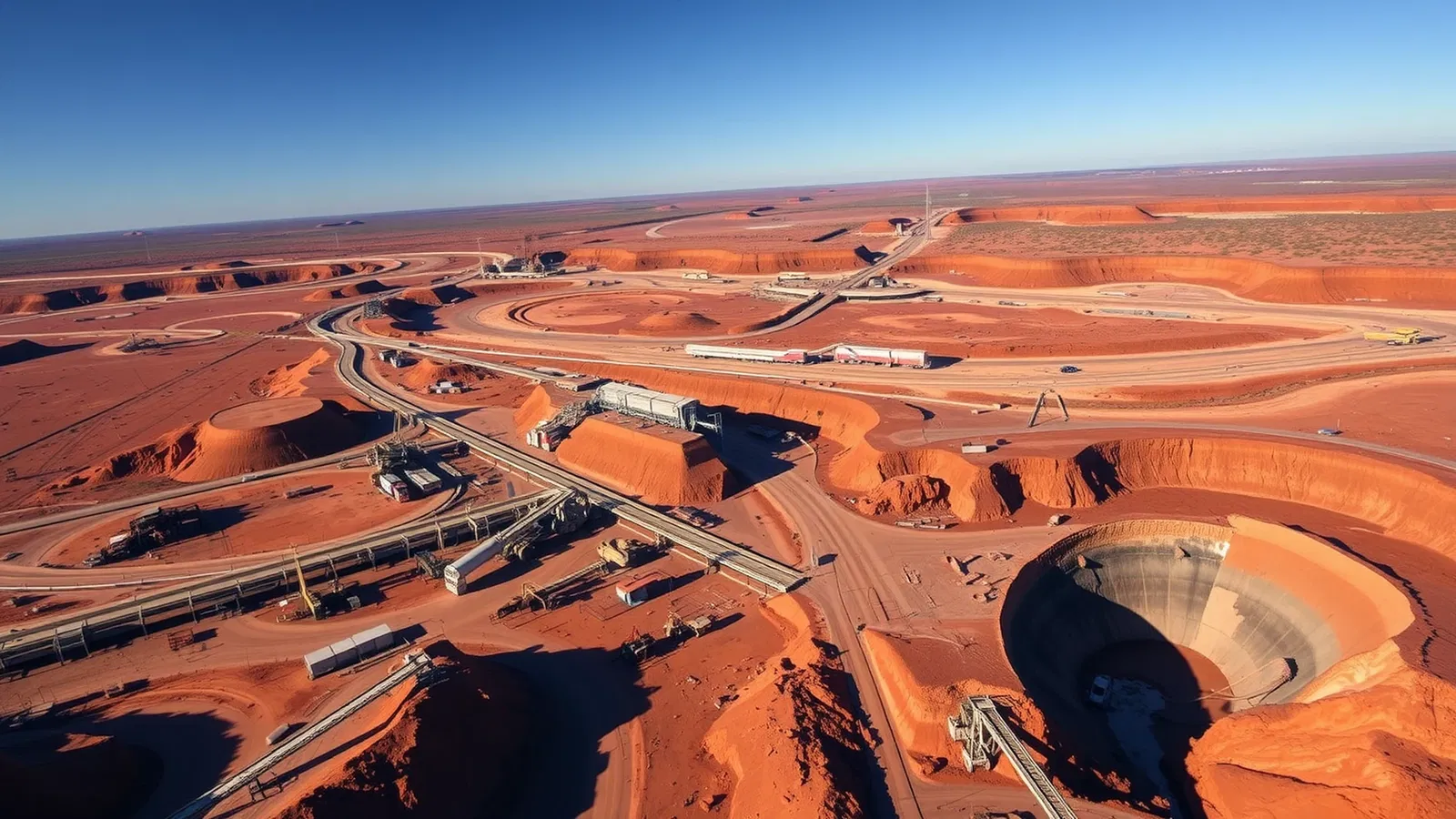
Apex Critical Metals is stepping up activity at its Rift Rare Earth project in Nebraska, deploying a second drill rig to accelerate the exploration program. The goal is to rapidly define how far the target zone extends and whether the historical indicators of Rare Earths hold up in current testing. Importantly, management stresses that only lab assays will confirm whether any carbonatite encountered translates into economically meaningful mineralization.
Second rig in play, three holes underway — what’s happened so far
In a release dated February 10, the Phase I operations at Rift are fully mobilized, with parallel drilling under way in addition to the new rig:
-
RIFT26-002: Carbonatite intersected over roughly 330 meters, starting at a depth of 178 meters. The hole is about 100 meters south of a historic borehole (NEC11-004) and aims to extend the known mineralization along strike while better bounding the geometry and orientation.
-
RIFT26-001A: Currently at 110 meters, with a target depth of 600 meters. The carbonatite has not yet been reached, but the company expects a break here at approximately 175 meters deeper.
-
RIFT26-003: The third hole has been initiated. Additional drill pads are being prepared to enable further step‑out drilling north and south of the priority zone.
Core processing is proceeding in parallel, and first samples are slated to be prioritized for lab analysis in the coming weeks.
Should investors sell immediately? Or is it worth buying Apex Critical Metals?
Why a carbonatite hit isn’t a guarantee of mineralization
Geology sets the stage: Rift sits within the Elk Creek Carbonatite Complex, a rock type often considered a potential host for critical metals such as Rare Earth Elements. However, Apex emphasizes that simply sampling carbonatite does not automatically indicate mineralization. The presence and grade of Rare Earths can only be confirmed through assay results from laboratory analyses.
For target development, the company combines data from historic drilling, surface geochemistry, and geophysical measurements, integrating them into a modern 3D geological model. Phase I focuses on a prioritized segment approximately 850 meters long in a north–south orientation within the project’s southeastern portion.
Historical signals frame the expectation
The project has drawn interest from past operators who reported broad intervals of higher‑grade Rare Earth mineralization, including:
- 155.5 meters with 2.70% REO
- 68.2 meters with 3.32% REO
These historical notes set market expectations for today’s program, though the key missing link remains the upcoming assays to confirm current continuity and grade.
Market backdrop
The share price reflected the early-stage nature of the exploration, trading at €1.53 on Friday, below the 50‑day moving average of €1.65.
Near‑term milestones to watch
Over the next weeks, investors will be focused on two main milestones: the anticipated carbonatite intersection at RIFT26‑001A around a depth of about 175 meters and, most critically, the first laboratory results that will indicate whether the drilling is yielding economically meaningful mineralization.
Ad
Apex Critical Metals Stock: Buy or Sell?! New Apex Critical Metals Analysis from April 1 delivers the answer:
The latest Apex Critical Metals figures speak for themselves: Urgent action needed for Apex Critical Metals investors. Is it worth buying or should you sell? Find out what to do now in the current free analysis from April 1.
Apex Critical Metals: Buy or sell? Read more here...